


This guide helps you learn Food blog SEO step by step so your recipes rank higher and get more clicks. Perfect for restaurant owners, food bloggers, and YouTube creators who want simple, practical SEO tips that actually work.
Why are your amazing recipes buried on page 5? You hit publish on a recipe. You share it once on social media. Then you wait. Nothing.
Your recipe is not bad. Your food photos are not bad. The real problem is that search engines do not yet see your recipe as the best answer to a clear search.
Someone types “easy paneer butter masala” or “Rajasthani Dal Baati” and Google has hundreds of options. If your post is not well structured, not clearly targeted, or hard to load on mobile, it will lose that quiet ranking battle.
That is what food blog SEO fixes. It is not magic. It is about lining up how you write with how people search.
What is food blog SEO?
Food blog SEO means optimizing your recipe posts, and site structure so search engines can index, understand, and rank your content for the right food related searches. Focus on long-tail keywords, helpful structure, clear recipe steps, fast pages, and rich extras like schema, video, and images. Treat each recipe like a tiny product page, not just a diary entry, and your food blog SEO will start working much harder for you.
Why SEO matters so much for food blogs
Most people do not browse food blogs for fun. They search for quick answers.
They type things like “easy gatta masala,” “vegan chocolate cake,” or “30 minute paneer tikka.” They scan the results. They click whatever looks most useful and trustworthy.
If your food blog SEO is weak, your amazing recipe might appear on page 4 or 5. That is basically invisible.
Strong SEO helps you:
- Get consistent traffic without paying for ads
- Improved Trust
- Increased Conversions
- Attract brand partnerships and sponsors
- Fill more tables if you are a restaurant
- Turn one recipe into traffic for years
So let’s break it down into practical, simple SEO tips for recipe posts that you can actually use.
SEO Tips for Recipe Posts
1. Finding the right keywords for food blogs
Let’s start with the simple truth. If your recipe doesn’t match what people type into Google, your food blog SEO will always struggle. The goal is to find real phrases your audience already searches for, and then use those naturally in your titles, headings, and content.
A handy way to pick SEO keywords for food blogs is to think in groups like these:
| Keyword Group | Examples of Terms to Include |
| By dish type | Cake, soup, salad, pizza, pasta, dosa, sambhar, pav bhaji, daal bati, chole bhature, muffin, dip. |
| By ingredient | Bread, potato, paneer, tomato, onion, broccoli, spinach, sweet potato. |
| By cooking method | Slow cooker, Instant Pot, air fryer, baked, grilled. |
| By diet or allergen | Keto, vegan, gluten free, low carb, dairy free, diabetic friendly. |
| By meal or time | Breakfast, lunch, dinner, snack, dessert, 30 minute. |
| By season or holiday | Diwali, Holi, Navratri, summer, winter, Savan. |
| By modifier | Easy, simple, quick, best, healthy, homemade, ultimate, classic. |
The magic happens when you combine these into specific phrases.
For example:
- Easy paneer dosa for breakfast
- 30 minute air fryer samosa
- Healthy baked broccoli soup
- Diwali special classic besan ladoo
These longer phrases are the kind of food blogging SEO keywords people actually type into search. For each recipe, choose one clear main keyword, like “easy paneer dosa” or “30 minute pav bhaji.” Use that in your title, URL, first paragraph, and one heading. Then sprinkle related words from the groups above throughout the post in a natural way.
Do this recipe by recipe and you’ll stop guessing, your content will finally match what people are already searching for, instead of sitting quietly on page 5.
2. Optimizing title tag and meta description
Your title tag is the headline that shows up in search, and for food blog SEO it has to do two things at once: clearly say what the recipe is and look more tempting than the other results on the page. A title like “Easy 30 minute paneer butter masala recipe” works because the main keyword is right at the start and the benefit is clear. Weak titles often hide or skip the main keyword, which makes it harder for your post to rank.
Just below the title, your meta description is the short summary people see in search results, and its job is to quickly tell who the recipe is for and what makes it special. You do not need to cram in lots of keywords here; one clear mention is enough. Focus on writing a natural, human friendly line that makes someone think, “Yes, I want to click that.”
3. Optimizing headings and heading tags
Headings tell both readers and search engines what each part of the post is about.
For food blogging SEO, think of headings like mini signposts:
- Use one H1 for the main recipe title
- Use H2s for big sections like Ingredients, Instructions, Tips
- Use H3s and H4s for smaller details inside each section
- Try to include variations of your main SEO keywords for food blogs in a few headings.
This structure makes your post easier to scan, which usually leads to better engagement and stronger food blog SEO overall. Google’s “helpful content” guidance is very clear: content should be easy to navigate and satisfying to use.
4. Detailed step-by-step recipe instructions
Search engines now pay attention to how people behave on your page, so if someone lands on your recipe and leaves quickly, it suggests the content wasn’t that helpful. Clear, detailed instructions keep readers engaged and scrolling. Aim for short, simple sentences, one action per step, and obvious cues like how the sauce should look or how fluffy the rice should be, plus extra tips for beginners such as heating the pan before adding oil. Imagine you’re teaching a smart teenager who has never cooked this dish before—that mindset usually forces you to explain every important detail. The bonus is that detailed instructions also give you natural places to repeat variations of your food blog SEO keywords without forcing them or sounding awkward.
5. Add ingredient lists, nutrition facts and cooking time
Google loves structure. Users do too. When your recipes always include:
- Ingredient list with measurements
- Prep time, cook time, and total time
- Nutrition facts, even a simple “calories per serving” line
you make the job easier for both search engines and recipe plugins. This is also about user intent. People do not just want a story. They want to know if they can make the dish tonight with what is already in their kitchen. Consistent structure strengthens your food blog SEO by helping Google extract rich information like cooking time and calories for recipe snippets.
6. Recipe schema markup
Recipe schema is special code that describes your recipe to search engines. Think of it as a structured summary of your recipe.
It can include fields like:
- Name of the recipe
- Description
- Ingredients
- Instructions
- Cook time and prep time
- Nutrition info
- Ratings and reviews
- Images and video
Most modern recipe plugins add this automatically. If you use WordPress, popular recipe card tools make recipe schema markup much easier.
Because schema is what powers rich results in search. Those eye catching results with stars, images, cooking time, and ingredients are usually built from structured data. Rich results often get higher click through rates. That means more people choose your recipe instead of another similar one.
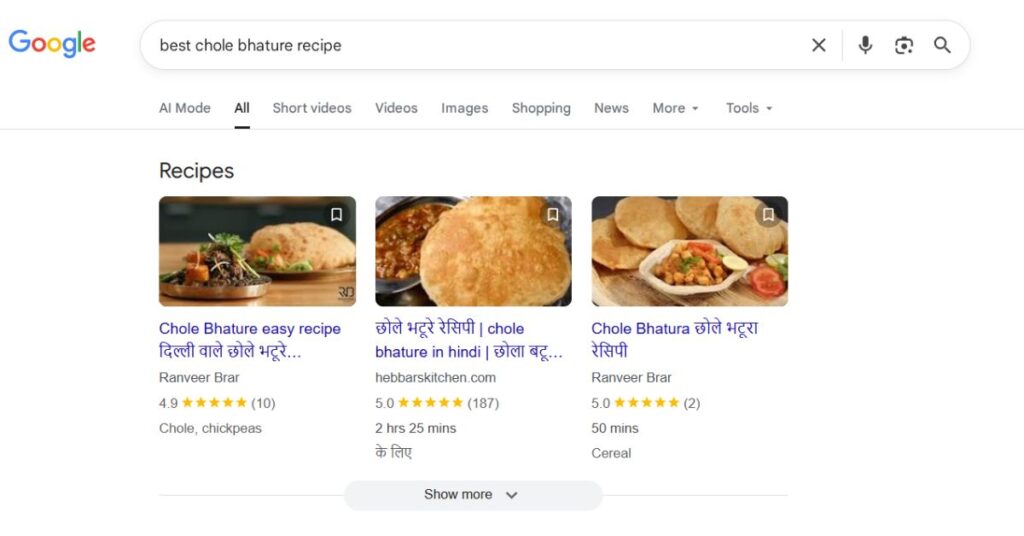
7. Embed YouTube video of the recipe
If you’re a YouTube food blogger, you already know how quickly video builds trust. When you embed your own YouTube video into a recipe post, readers stay on the page longer to watch it, they see your face and hear your voice which builds loyalty, and search engines get another strong signal that your recipe is detailed and high quality. From a food blog SEO perspective, video can also help you show up in Google video results and in YouTube search, giving your recipe extra visibility. And if you don’t have video yet, just start small, even a simple overhead phone recording of the main steps is far better than having no video at all.
8. Use unique images with proper alt text
Stock photos are tempting. But real, unique images almost always perform better for food blogs. Take your own photos of each recipe.
Aim for:
- Clear, well lit images
- At least one horizontal image that can work as a featured image
- Process shots for tricky steps like forming dough or getting the right browning
- Then add descriptive alt text.
Alt text boosts your food blog’s SEO by giving search engines more context, allowing your images to rank in Google Images and drive additional traffic.
Example of Image alt text:
“Bowl of creamy vegan tomato soup topped with fresh basil and croutons”
That is much better than “soup” or “image one.”
9. Add chef’s bio
People trust recipes more when they clearly come from real humans, not faceless websites, so add a short chef bio box near the recipe card. Include your name, your role (restaurant owner, food blogger, private chef), one line about your cooking style or background, and a small photo. This simple box, along with an internal link to a standalone chef or “About the Chef” page, makes your food blogging SEO feel more credible and human. It also supports Google’s focus on experience and expertise (E-E-A-T) by clearly showing that a real cook or chef stands behind every recipe.
10. Display published/last updated date
Recipes evolve over time. You try a better method, swap ingredients, or add new options like air fryer instructions. When you show both the original published date and a “last updated” date on the page, you send a strong freshness signal to both users and search engines. People feel more confident trying a recipe that was updated last month instead of five years ago. From a food blog SEO point of view, regularly updating your key recipes is a smart habit. You do not need to rewrite everything; even small tweaks count. You can add a simple note like: Updated March 2025 with new step by step photos and air fryer instructions.
11. Gain mentions from other food blogs
Backlinks still matter a lot for food blog SEO, because when other blogs or websites link to your recipes, it acts like a vote of confidence in the eyes of search engines. You do not need to push aggressive link building; instead, look for natural, food focused ways to earn mentions. Join round up posts with other bloggers, offer guest recipes to smaller sites in your niche, and create useful resources like ingredient guides or substitution charts that people actually want to link to. Spend time building real relationships in your niche on social media as well. Mentions and links from relevant sites help boost your whole food blog, not just one single recipe.
12. Site speed and mobile-friendliness
Most people search for recipes on their phones while standing in the kitchen, so your site has to be fast and easy to use on mobile. If your page loads slowly, many users will hit back and choose another result, and slow pages also tend to perform poorly against Google’s page experience expectations. Check your own recipes on your phone and ask yourself: how fast does the page load, is the text easy to read, do pop ups block the content, and can I scroll through the recipe card easily with one hand? To improve things, compress large images, cut down on heavy scripts, and use lazy loading for photos and videos. A fast, mobile friendly recipe page is now a basic requirement for strong food blog SEO.
13. Add internal links to relevant pages
Internal links are simply links from one of your posts to another, and they quietly do a lot of work for your food blog SEO. They help readers discover more of your recipes, help search engines understand which pages belong together, and allow authority from your stronger posts to flow to newer or weaker ones. In practice, this might look like linking from a paneer butter masala recipe to your naan, rice, and raita recipes, or from a vegan dessert to a vegan dinner round up, or from a restaurant story post to your signature dish recipes. Use clear, descriptive anchor text like try my garlic naan recipe instead of vague phrases like click here, so both people and search engines know what to expect.
14. Add “Jump to Recipe” button
Many readers are in a hurry and just want to cook, so a Jump to recipe button at the top of the post is a simple way to respect their time. From a food blogging SEO perspective, this helps because users can quickly reach the recipe card, they are less likely to bounce out of frustration, and you can still keep your stories, tips, and step by step explanations for readers who enjoy more detail. Make sure the button is easy to see and scrolls directly to the main recipe card when tapped, especially on mobile.
15. Optimize the first sentences of your recipe post
The first introductory sentences of your recipe post matter a lot, both for readers and for food blog SEO. They often appear right under your title in search results and they set the tone for the whole page, so use them to clearly say what the recipe is, who it is perfect for, and one or two strong benefits. For example, you might write: This easy 30 minute paneer butter masala recipe is perfect for busy weeknights. You get a rich, creamy curry with basic spices. That kind of opening naturally supports food blog SEO because it repeats your main keyword in a helpful way and gives the reader a clear reason to care and click.
How can a Jaipur restaurant use recipes from chefs to improve its local SEO?
A Jaipur restaurant can turn chef recipes into a powerful local SEO engine by publishing signature dishes from the menu (like aloo pyaz paneer, gatte ki sabzi, or garlic naan) as detailed, home friendly recipes with location rich titles such as “Jaipur style aloo pyaz paneer recipe.” Inside each post, weave in local phrases and landmarks, add a Google Map and reservation link, show the chef in photos and video, and connect the recipe to your About, Menu, and Google Business Profile. Then, promote these recipes through Jaipur food bloggers, local communities, and small contests to earn mentions and backlinks. Over time, this mix helps you rank for both recipe searches and “restaurant in Jaipur” type searches. If you’d like someone to plan and implement this for you, I’m an SEO Expert in Jaipur offering freelance SEO services and can set up a complete content and local SEO strategy for your restaurant.
Conclusion
Start with one recipe today, audit it against this checklist.
You do not need a huge team. You do not need perfect English. You just need to be consistent and a little bit strategic.
Treat each recipe like a helpful answer to a specific search. Focus on food blog SEO basics like clear keywords, strong titles, solid structure, and honest, detailed instructions.
Then layer in the extras like schema markup, video, author bios, internal links, and local flavor for restaurants.
Over time, your recipes will stop living on page 5. They will show up where hungry people can actually find them, cook from them, and maybe even become your regulars in real life.


I’m Yash Runthala, a Jaipur local for over 25 years, marketer by profession, traveler by passion, and food blogger by choice. I created this Jaipur Food Guide to help travelers and food lovers discover the real taste of Jaipur through honest restaurant reviews, authentic Rajasthani cuisine, iconic street food, hidden gems, and local stories from the Pink City.

