

This guide will help you understand Ecommerce SEO, providing simple, actionable tips for businesses selling luxury meenakari jewelry, Jaipuri Sanganeri print shirts, handcrafted mojris, Bagru print bedsheets, and more. Perfect for Jaipur entrepreneurs ready to take their local shop to the global market.
You’ve built your business in the heart of Jaipur, whether it’s selling luxury meenakari jewelry, traditional lac bangles, vibrant Bagru print bedsheets, handcrafted Jaipuri jutis/mojaris, beautiful Jaipuri Sanganeri print shirts, or exquisite blue pottery. Your local customers love your products, and your shop in Jaipur enjoys plenty of foot traffic. Now, you’re ready to take the next step and expand your reach beyond the streets of Jaipur to a global audience.
Simply having a website isn’t enough. If you want people from places like the USA, UK, and other parts of the world to discover your unique Jaipur products, you need to ensure your store appears in search results when they’re looking for exactly what you offer.
This is where Ecommerce SEO comes in. It’s not just about having an online presence; it’s about making sure your products, whether it’s your vibrant handmade jewelry or your exquisite block print fabrics are visible to customers who are actively searching for them. In this guide, I’ll show you how to use Ecommerce SEO to grow your local Jaipur business and turn it into a global brand. Let’s dive in!
What is Ecommerce SEO?
Ecommerce SEO is about optimizing your online store so it appears higher in search engine results like Google. It’s not only about using the right keywords but also ensuring your website is easy to navigate, contains relevant content, and offers a great user experience for customers. When done properly, SEO helps drive more traffic to your website, increase sales, and build your brand’s reputation.
Why Is Ecommerce SEO Important for Brands in Jaipur?
It doesn’t matter how amazing your products are if no one can find your website. Without good SEO, your site could end up buried on the 10th page of Google, where no one will see it. With the right Ecommerce SEO, you can change that and attract visitors who are actively searching for what you sell. This is crucial whether you’re trying to attract customers in India, the USA, or the UK.
SEO isn’t just about traffic—it’s about attracting the right traffic. With strong SEO, people who are searching for handmade Jaipur jewelry, Sanganeri block print shirts, or your other unique products will find your store. When you show up in search results, people are more likely to trust your brand and make a purchase.
Ecommerce SEO Strategy for Jaipur Businesses in 2026
Building an effective Ecommerce SEO strategy requires careful planning. For 2026, here are a few key steps to get started:
1. Know Your Audience
Understanding your audience is the foundation of a successful Ecommerce SEO strategy. Before you dive into SEO, take the time to research and define who your target customers are and what they are searching for. This is especially important for businesses in specific niches, like ethnic wear or Jaipur-based products.
For instance, if you sell traditional Rajasthani fashion such as Jaipuri Sanganeri print shirts or vibrant Bagru print bedsheets, it’s crucial to know the terms your potential customers use when searching for these items online. Are they looking for “handmade Rajasthani clothes,” “Jaipur ethnic wear,” or “block print bedsheets”? Understanding this helps you target the right keywords and tailor your content to meet searchers intent. Knowing your audience also allows you to create a personalized shopping experience, which can lead to higher conversion rates and better customer satisfaction.
2. Perform Keyword Research & Mapping
Keyword research is one of the most important steps in Ecommerce SEO. It’s about finding the words and phrases your potential customers use when searching for products like yours. Without the right keywords, your website won’t show up in search results, meaning you’ll miss out on valuable traffic.
Start by brainstorming a list of terms related to your products, such as “handmade Jaipur jewelry” or “traditional lac bangles.” Next, use keyword research tools like Google Keyword Planner, Ahrefs, or SEMrush to find popular search terms that are relevant to your business. Look for keywords with high search volume but low competition. These are the keywords that will help your site rank higher in search results. Don’t forget to also include long-tail keywords—phrases that are more specific and less competitive, such as “affordable Jaipuri mojris” or “buy traditional Rajasthani blue pottery online.”
3. Improve Site Structure
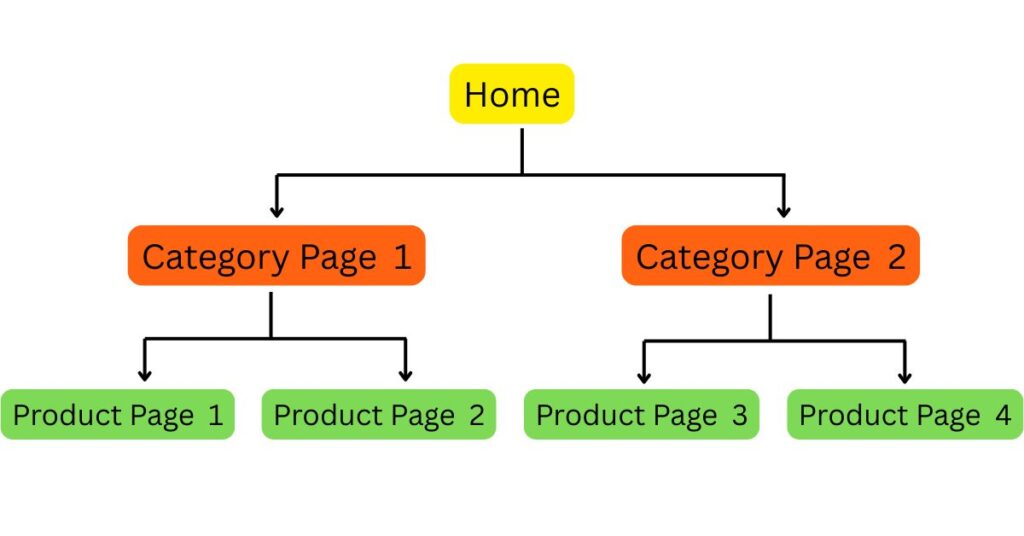
A well-organized site structure not only helps search engines understand and index your pages but also makes it easier for customers to navigate your online store. An easy-to-use website keeps customers engaged and encourages them to explore more of your products, ultimately boosting sales.
To improve your site structure, start by creating clear and logical categories for your products. For example, if you’re selling ethnic wear, you might have categories like “Sanganeri Print Shirts,” “Bagru Print Bedsheets,” or “Jaipuri Jutis.” Ensure that your website’s navigation is simple, with clear links to each product category and relevant subcategories. A clean, organized site structure helps both customers and search engines quickly find what they’re looking for.
4. On-Page SEO Optimization
On-page SEO refers to all the steps you take on your website to help it rank higher in search engines. This includes optimizing key elements on your product and category pages. Here’s how to do it effectively:
- Meta Titles and Descriptions: Make sure each product page has a unique, keyword-rich meta title and description. This helps search engines understand what the page is about and encourages people to click on your page when it appears in search results.
- Optimize H1 Headings: Your H1 heading should clearly describe the product on the page and include your target keyword. For example, “Handmade Meenakari Jewelry from Jaipur” can help both search engines and users understand what the page is about.
- Product Images: Ensure your product images are high-quality and have alt text that describes the product. Alt text not only helps with SEO but also makes your site more accessible to people with visual impairments.
- Add FAQs: Adding a Frequently Asked Questions section to your product and category pages can help address common concerns and improve your rankings. Google loves pages that answer specific questions, and having this content on your site can help your product pages appear in rich snippets.
5. Add Internal Links
Internal links are links that point to other pages within your own website. They help search engines discover more content on your site and understand the relationship between different pages. Internal links also improve the user experience by allowing customers to easily navigate your website and find related products.
For example, if you’re selling Jaipuri jutis, you could link to related products like “traditional Jaipuri skirts” or “ethnic accessories” within the product descriptions or blog posts. This keeps customers on your site longer and can increase the chances of making a sale.
6. Optimize for Mobile
In today’s world, mobile optimization is crucial. More and more people are shopping online using their smartphones, and Google now gives ranking priority to mobile-friendly websites. If your website isn’t optimized for mobile devices, it could hurt your rankings and turn potential customers away.
Ensure that your site is responsive, meaning it adjusts automatically to different screen sizes. Your images should be properly sized for mobile devices, and your checkout process should be quick and easy. A mobile-friendly website not only helps you rank higher but also provides a better experience for your customers, leading to more conversions.
7. Focus on Quality Content
Google values high-quality content because it provides value to users. High-quality content answers customers’ questions, solves their problems, and showcases your products in the best possible light.
When writing product descriptions, make sure they are detailed, informative, and include relevant keywords. For example, if you’re selling handmade jewelry, explain the materials used, the process behind making each piece, and why it’s unique. Additionally, consider creating blog posts or buying guides related to your products, such as “How to Care for Jaipuri Lac Bangles” or “The History of Traditional Rajasthani Textiles.” Content like this helps build trust with customers and boosts your website’s visibility in search results.
8. Build Backlinks
Backlinks are links from other websites that point to your site. They are a key factor in SEO because they signal to search engines that your website is trusted and authoritative. The more high-quality backlinks you have, the more likely your site is to rank higher in search results.
To build backlinks, consider collaborating with other local businesses, influencers, or bloggers who can link to your products. For example, if you sell blue pottery, try reaching out to a home decor blog and ask them to feature your products. The more backlinks you build, the stronger your website’s authority becomes, which helps improve your rankings and drive more organic traffic.
9. Use Product Listings Schema Markup
Product Listings Schema Markup is a simple yet powerful tool to help your products stand out in search results. This little-known trick allows you to add structured data to your product pages, which helps search engines like Google understand the details of your products—such as price, availability, ratings, and more.
By using schema markup, your products can appear in rich snippets—those eye-catching product listings that show up at the top of search results with key details like prices, reviews, and ratings. This makes your products more noticeable and clickable, which can significantly boost your visibility and click-through rates. As a result, potential customers are more likely to click on your products and visit your website, which can lead to higher sales and increased traffic.
10. Create Blog Posts for Bottom-of-Funnel (BoFu) Content
Bottom-of-funnel (BoFu) content refers to blog posts or articles designed to address the final questions or concerns of customers who are close to making a purchase. These customers are in the decision-making stage, so your goal is to provide them with content that convinces them to choose your products over competitors.
For example, if you’re selling Jaipuri Sanganeri print shirts, you could create a blog post like “Why Jaipuri Sanganeri Prints Are Perfect for Your Wardrobe” or “How to Style Your Jaipuri Sanganeri Shirt for Any Occasion.” These posts should provide answers to common customer concerns or highlight the unique features of your products, making it easier for customers to decide to purchase. By creating content that speaks directly to their needs, you increase the likelihood of converting visitors into paying customers.
11. Improve Page Speed
Page speed is an important factor for both SEO and user experience. Websites that load quickly provide a better browsing experience, keeping customers engaged and reducing bounce rates. On the other hand, slow-loading websites can frustrate users, leading to abandoned shopping carts and lost sales.
Google also considers page speed as a ranking factor. This means that if your website is slow, it could negatively affect your search engine rankings. To improve your page speed, you can compress large images, minimize unnecessary code, and use content delivery networks (CDNs) to speed up loading times. Regularly testing your site with tools like Google PageSpeed Insights can help you identify areas for improvement and ensure that your website remains fast and efficient.
12. Find and Fix Other Technical SEO Issues
Technical SEO is the foundation of a well-optimized, SEO-friendly website, and regularly checking for issues is key to maintaining good rankings. Some common technical SEO issues include broken links, slow-loading pages, missing meta tags, and duplicate content.
Broken links can harm both user experience and SEO, as they prevent customers from accessing important pages on your site. Slow-loading pages, as mentioned earlier, can cause customers to leave your site before making a purchase. Regularly audit your website for these issues, fix any broken links, optimize loading times, and make sure all your pages are properly indexed by search engines. Keeping your site free of technical issues ensures that your website runs smoothly, improving both your search rankings and user experience.
By following these steps and optimizing each area of your Ecommerce site, you can improve your chances of ranking higher in search engines, attract more customers, and ultimately grow your business online.
Pro Tip: On e-commerce sites, sorting and filtering often create duplicate category URLs that confuse search engines and dilute rankings. Fix this by setting canonical tags on all filtered/sorted URLs to the main, clean category URL. This keeps your filters for users, but tells Google exactly which page should rank.
Benefits of Ecommerce SEO for Businesses in Jaipur
When you get your Ecommerce SEO right, here’s what you’ll gain:
- Increased Traffic: More people will discover your store through organic search.
- Higher Sales: With more visitors, you’ll have more chances to make sales.
- Brand Trust: Ranking high on Google builds credibility and trust with customers.
- Global Reach: SEO helps you expand your local brand and reach customers worldwide.
- Cost-Effective Marketing: SEO drives organic (free) traffic, offering better long-term ROI compared to constant paid advertising.
- Competitive Advantage: SEO helps you outrank local competitors in Jaipur’s growing digital marketplace.
- Improved User Experience (UX): By optimizing your website’s structure, speed, and content, you make shopping easier for customers, which improves customer satisfaction.
Further Reading: Learn more about how SEO can help small businesses, check out our post on Benefits of SEO for Small Business.
Hire an Ecommerce SEO Expert in Jaipur
If you’re looking to expand your local Jaipur shop to a global audience and need expert guidance, I’m here to help. As the best SEO freelancer in Jaipur, I have the experience and expertise to optimize your ecommerce website and take your business to the next level. Together, we can develop a customized SEO strategy tailored to your unique needs, helping your business thrive in the digital world.
Use Ecommerce SEO to Take Your Local Shop to the Global Market
Ecommerce SEO is the key to turning your local Jaipur business into a global brand. By following the steps in this guide and consistently working on your SEO strategy, you can increase traffic, build trust, and make your products visible to customers worldwide. Ready to get started? Let’s make your business the next big global brand from Jaipur!


I’m Yash Runthala, a Jaipur local for over 25 years, marketer by profession, traveler by passion, and food blogger by choice. I created this Jaipur Food Guide to help travelers and food lovers discover the real taste of Jaipur through honest restaurant reviews, authentic Rajasthani cuisine, iconic street food, hidden gems, and local stories from the Pink City.

